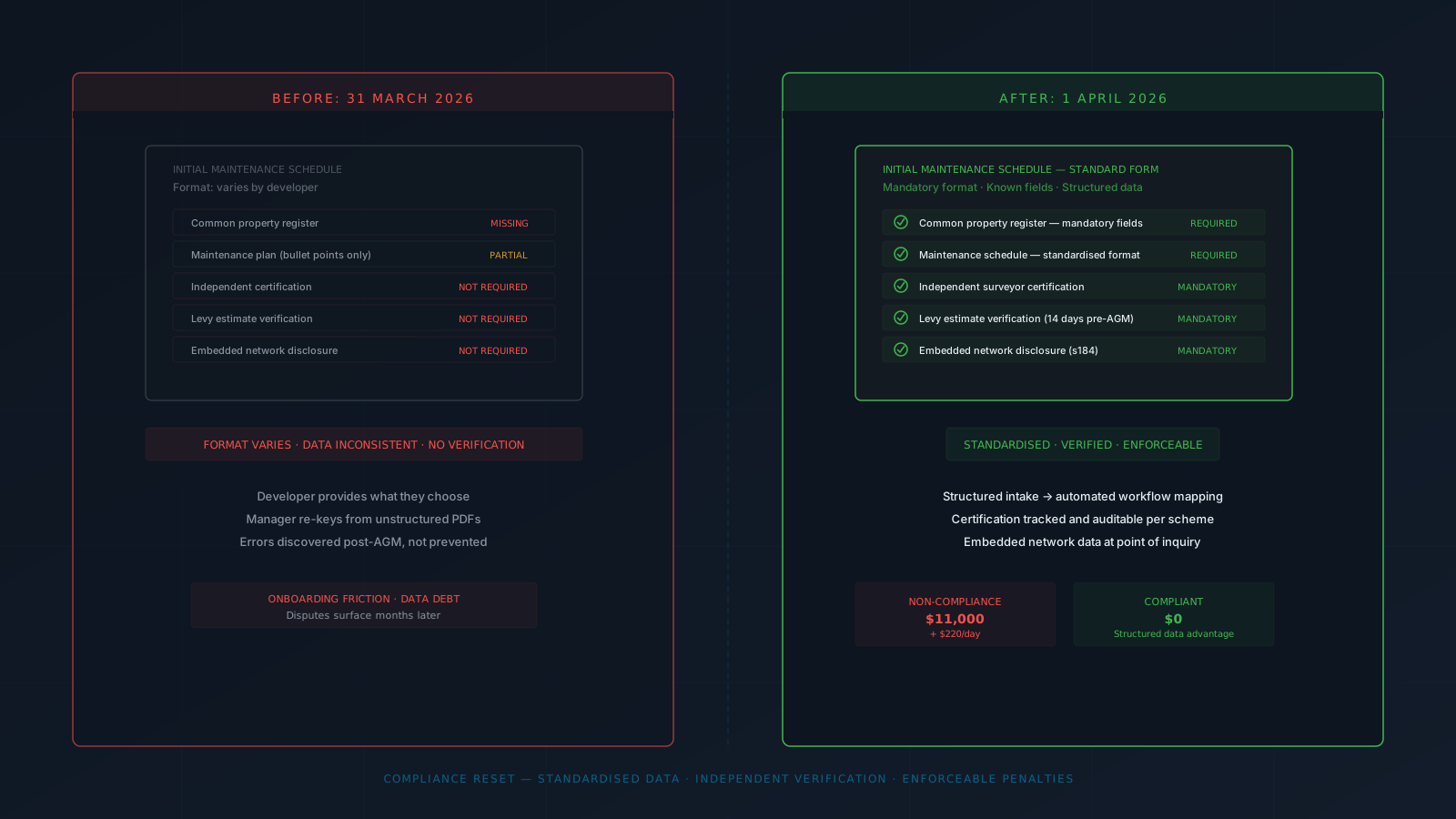
On 1 April 2026, the latest tranche of NSW strata reforms took effect. They are the most operationally significant changes to hit strata managers since the original Strata Schemes Management Act 2015 — and their implications extend well beyond New South Wales.
These reforms don't just update rules. They standardise the data. And when data gets standardised, technology gets leverage.
This article breaks down what changed, why it matters for professional strata managers across Australia, and what it demands from the technology platforms they depend on.
What Actually Changed on 1 April
The April 2026 reforms target the earliest and most error-prone phase of a strata scheme's lifecycle: handover from developer to owners corporation. Three changes stand out.
The Three Pillars of the April 2026 Reforms
STANDARD
CERT
NETWORKS
The Penalties Are Real
This is not aspirational regulation. The enforcement framework carries material consequences.
Penalty Schedule — April 2026 NSW Reforms
These penalties change the cost-benefit calculus. The cost of non-compliance now exceeds the cost of getting the systems right.
Why This Matters Beyond NSW
NSW is the largest strata jurisdiction in Australia — over 85,000 schemes. When NSW standardises a form or mandates a certification, the other states watch. Victoria's 2025 legislative reforms are already tracking a similar trajectory. Queensland's evolving regulatory framework is adding complexity at pace.
The pattern across Australian strata legislation is convergent: more standardisation, more disclosure, more accountability, more data. A strata platform that is architected for jurisdiction-parameterised compliance — where the rules engine adapts to each state's requirements without manual reconfiguration — will handle these cascading reforms without breaking stride. One built on hard-coded assumptions for a single jurisdiction will spend the next three years patching.
What This Demands from Technology
The April 2026 reforms create three specific technology requirements that every strata management platform should be evaluated against.
Platform Capability Requirements
The Onboarding Connection
In March, we wrote about The Onboarding Trap — how data quality errors in the first 48 hours of a scheme's lifecycle compound through every automated workflow for the building's lifetime. The April 2026 reforms directly address this problem at the regulatory level.
A standardised IMS form reduces intake variance. Independent certification adds a verification layer before the data enters the system. Embedded network disclosure ensures that a category of information that previously emerged only through disputes is now captured at onboarding.
These reforms don't eliminate onboarding risk. But they reduce the surface area for error at the most critical juncture — and they reward platforms that are built to exploit structured data rather than work around unstructured inputs.
The Bottom Line
The April 2026 NSW reforms are not cosmetic. They standardise data at scheme inception, mandate independent verification, and expand disclosure requirements — all with meaningful financial penalties for non-compliance.
For strata managers, the question is straightforward: does your platform treat these reforms as a compliance checkbox, or as a structural opportunity to automate intake, validate certifications, and track embedded networks at scale?
The firms that get this right will manage more schemes with less onboarding friction. The firms that don't will pay the penalties — financial, operational, and reputational.
The reforms standardise the data. The platform that can consume structured data fastest wins.